


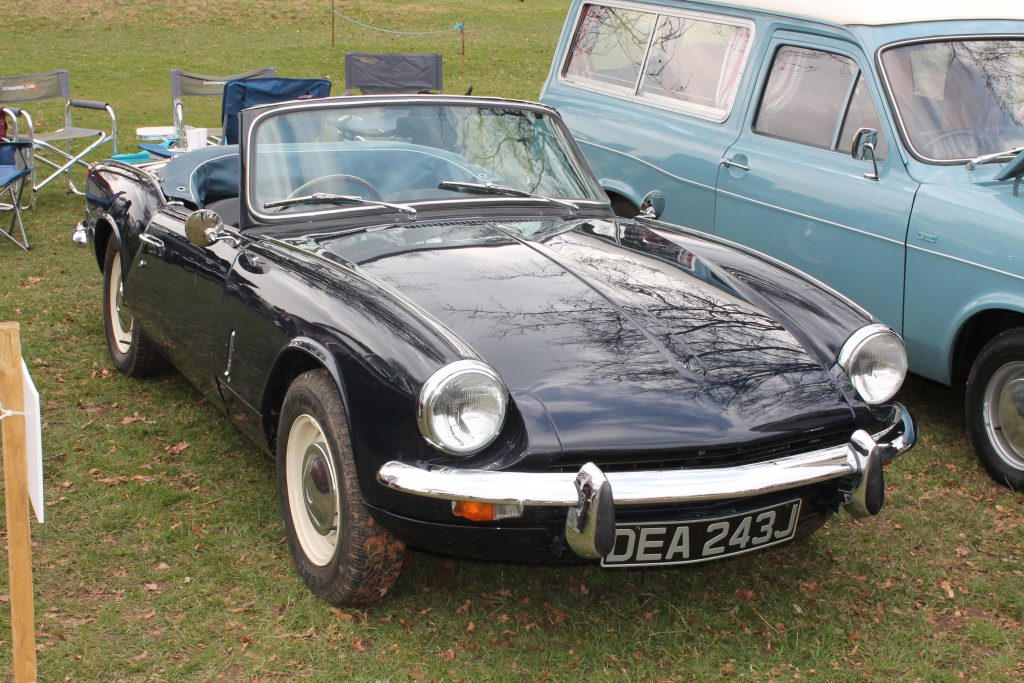

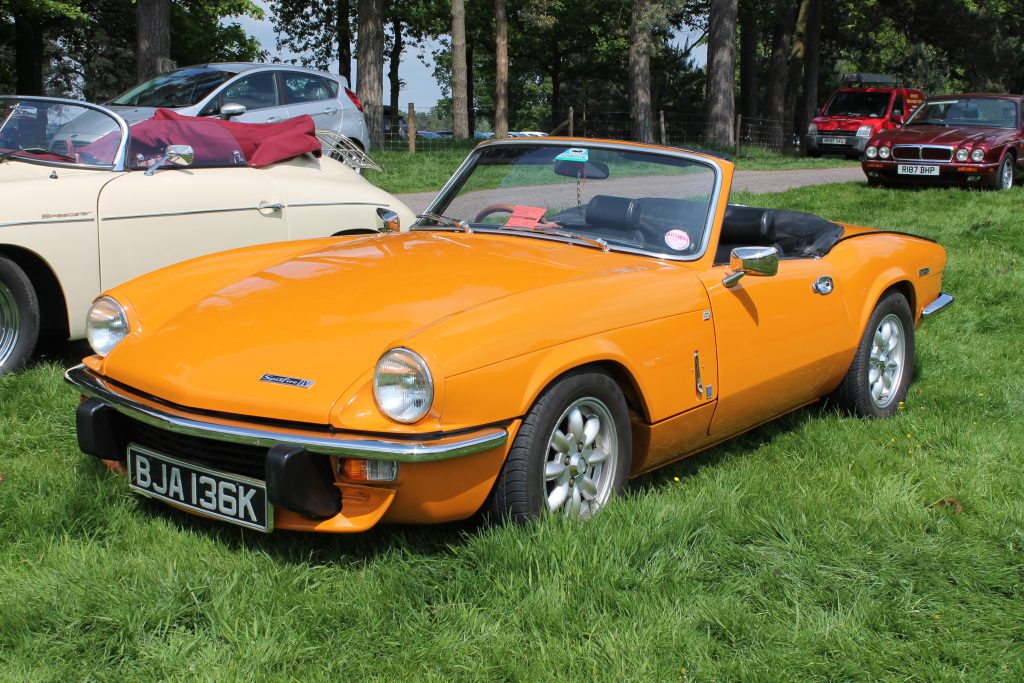


It can trace its roots back to humble origins, but the Triumph Spitfire survived rocky post-war origins to become a venerable British staple, fulfilling the British sports car formula perfectly. It enjoys an enthusiastic fan base to this day, and for anyone hankering after the British classic experience, the Spitfire is surely the obvious candidate.



The Spitfire was hurriedly launched in 1962 as a riposte to the successful Austin-Healey Sprite, and would soon have to contend with the MGB phenomenon too. Using common-or-garden Herald underpinnings gifted the Spitfire a separate chassis construction, and was the fastest route for Triumph to get it out to market. It allowed Giovanni Michelotti to have free reign over the body, crafting the shape that we now know and love, without having to worry about the running gear it sat on. The Spitfire was an immediate hit, but the Sprite rivalry continued (with both companies continually one-upping each other with derivatives) until 1968, when Triumph and Austin were merged under the BL banner. The Spitfire kept on going, with the Mk IV arriving in 1970, complete with a Michelotti-penned redesign. Although its sporting credentials were dented by the added weight that the face-lift brought, the introduction of the 1500 engine in 1974 helped minimise the damage. Production ended in 1980, bringing an 18-year run to an end.
It doesn’t take Sherlock Holmes to work out the Spitfire’s deadliest enemy is rust. It is a child of the Sixties and Seventies after all, and British workmanship during that era - especially at BL - was never exactly thorough. Rot blights both chassis and body, which is bad news. The sills are integral to the car’s overall strength, and if rust reaches them you’ll have a two seater banana on your hands. The whole car is one big trouble spot. Starting at the front and working your way backwards - the front valances and bumper outriggers are rust traps, as are the bonnet (especially the area around the front lip) and wheel arches. Next, check the base of the bulkhead, a-posts and windscreen frame. The outriggers can also rot, along with the floors, rear radius-arm mounts, chassis rails, and under the differential. The wings (especially along the bottom), the rear valances and the bootlid are also worth inspecting. As mentioned, it’s critical you ascertain the state of the sills. The worst spot is where the sill meets the rear wing. It’s worth bearing in mind that, because all the body panels are bolted on, they can be replaced easily, and wouldn’t necessarily write the car off.
The four-cylinder unit is simple, durable and child’s play to work on. As long as the engine has been well-maintained there aren’t any horror stories to worry about. Having said this, quirks are part and parcel with classic motoring and the Spitfire is no exception. Firstly, the engine needs the correct oil filter to stop it going pop. This filter has a non-return valve to prevent the oil dripping back into the sump when the car is idle. If there is rattling when you start the car, it’s probably a broken big-end bearing on the crankshaft, often a result of an incorrect filter. At this point you’d need to rebuild the bottom half of the engine. The 1296cc can eat through its thrust washers due to excessive fore-aft movement from the crankshaft. You can check this by pushing and pulling the front pulley. If there is any movement then it likely or not spells disaster. The crankshaft and block could be written off. The later MkIV Spitfires are particularly susceptible to this, so keep an ear out for rumbling from the bottom end when the engine is idling.
The transmission is derived from the Herald, which means it should be solid. Nevertheless, if you can hear rumbling when you’re out on a test drive then it points towards worn bearings, while whining is likely the diff or worn gears. The synchromesh can also wear, so run through the gears a few times and make sure there isn’t any grinding. The overdrive can also break, usually due to faulty electrical connections, a lack or gear oil or the overdrive relay. These aren’t difficult to put right so don’t worry if the overdrive is faulty on your example.
There’s a number of issues with the suspension to watch out for. The front trunnions can wear if they are not topped up with EP90 every half a year, and the nylon bushes are also susceptible. This isn’t a showstopper, you can replace them pretty easily. The anti-roll bars can break and the steering rack, front top mounts and wheel bearings have been known to wear. The latter can be an issue if they wear directly on the half shaft, which can be damaged in turn. With the exception of the wheel bearings, this is all cheap and easy to fix.
The Spitfire hails from an era of stone age electrics - it’s not generously equipped and there’s little to go wrong. Any electrical issues will be minor, likely due to earthing issues or a cheap component breaking. There’s no need to worry, all parts are cheap and readily available.
Due to the Triumph’s popularity, interior trim is easy to come by and won’t break the bank. A rough interior isn’t a deal breaker, but check the basics - including the roof, which can crack or split - as well as the rear window. Examples with mohair hoods in good condition command a premium.
The Spitfire should drive exactly how it's burly, handsome exterior promises. The engine was outdated even in period (it originated from the Standard Eight in the early Fifties), but it is a great match for the chassis and can be tuned with ease. It is no Lotus Elan, and the handling is not the last word in precision, but a good Spitfire should thread its way along a b-road with ease. If there is knocking from the suspension or the body roll is out of control, then you need to take another look at the anti-roll bars or the bushes, because something is clearly amiss. Overall, the Spitfire is the perfect companion on a Sunday afternoon drive to the pub. There are few higher compliments than that.
The beauty of the Triumph is its value. The Austin-Healey Sprite is commanding serious money, and chrome-bumper MGB's are climbing in price, so the Spitfire represents a steal on the classic car market. You can pick up a MkI to III project car for a couple of grand, with Mk IV rust buckets going for as little as £1,000. If you’re looking for a good runner then you’re looking at £3,000-£5,000 for an early car and a fraction less for a Mk IV-1500. Even the show stopping best of breed stuff can be hand for £12,000 (Mk I-III) and £9,000 (Mk IV-1500).
As long as the rust issues have been dealt with and the engine is well-maintained, there really is no sting in the tail when you buy a Triumph Spitfire. Values are incredibly tempting because the Spitfire is one of the few genuinely affordable classics left on the market. It’s hard to see prices fall any further, so if you buy now it’s reasonable to expect to make money on your purchase.
The Triumph Spitfire is the archetypal British sports car. While it’s rivals have left their working man’s image behind in favour of mega bucks values, the Spitfire remains one hell of a motoring experience for the money.
Clubs & Websites

 Log in / Register