


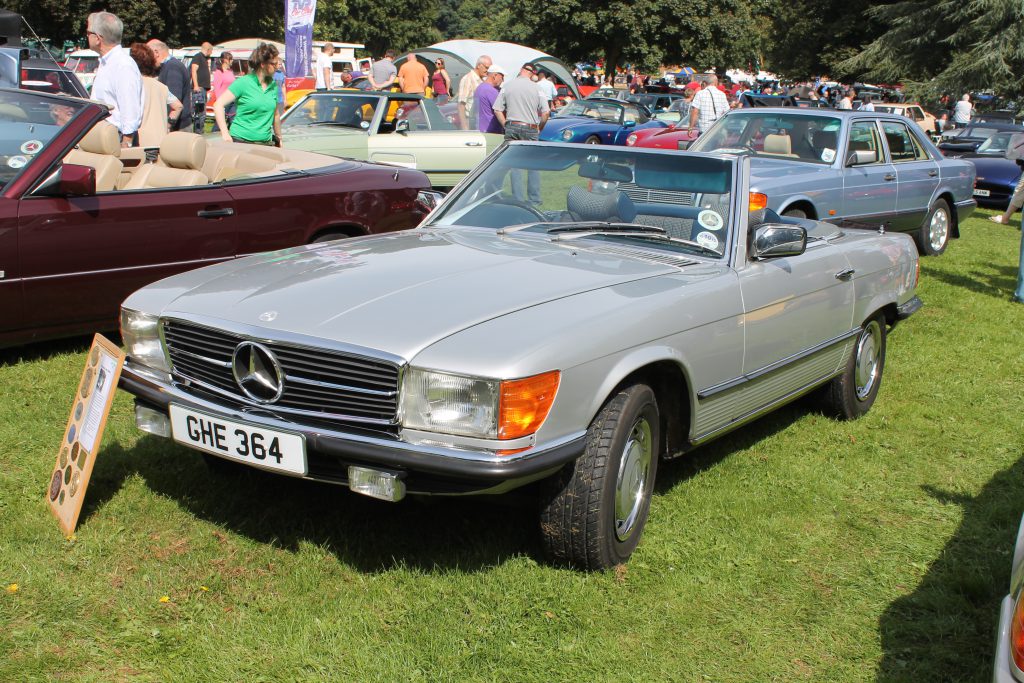
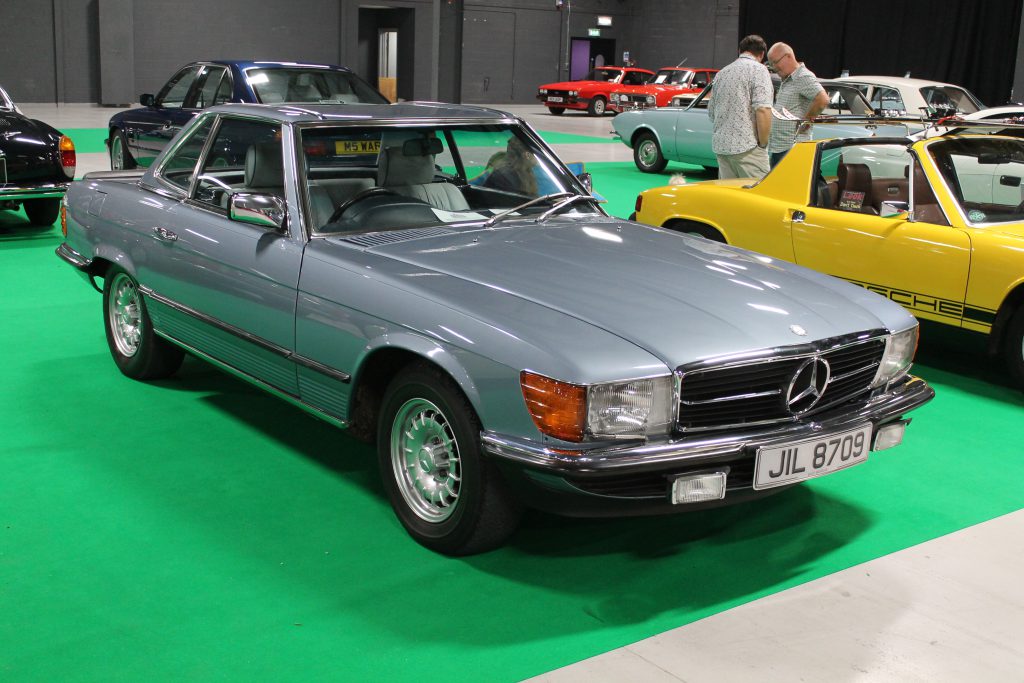


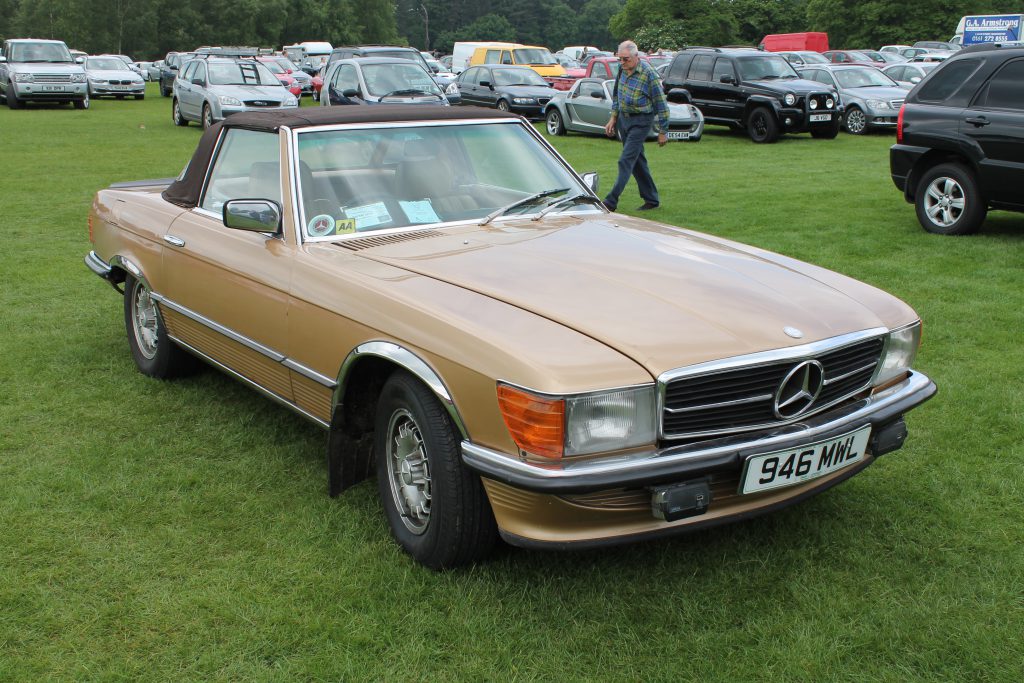


The Mercedes R107 SL suffers from a strange paradox, lacking the perceived desirability of its forebears, but too old to be regarded as a status symbol like its successors. Ironically, the R107, which was hyper-successful in period, is the sweet spot in the SL lineage. Buy well and you can have one of the greatest examples of German engineering for less than a brand new Fiesta.


Born at the height of Merc’s incredible over-engineering, the R107 is an exemplary example of what the German marque was capable of before its production integrity deteriorated in the Nineties. This is particularly commendable because the R107 had clown-sized shoes to fill. It was designed to replace the spectacularly beautiful Pagoda SL. While the looks of the earlier car would be impossible to match, Mercedes threw everything it had at making the R107 a technical tour-de-force (something the ageing Pagoda could never be accused of being). The fit and finish was tank-like, earning the R107 the nickname of ‘Panza’, and the engine remains a metronomic precision instrument. A brief acquaintance with a well-sorted R107 is enough to highlight just how far Mercedes’ engineering has fallen in the years since. This is a grand tourer that continues to crush continents without so much as a hiccup, half a century after it was first introduced - in 1971. Like all SL’s, Mercedes built its reputation around this flagship model, and the R107 did not disappoint. Praise came from the most unlikely of sources. Colin Chapman was so impressed after driving an R107 that he decided to turn his back on tiny, uncompromised sports cars like the Elan and pursue a more premium market with the Eclat and Excel. Unsurprisingly, the R107 was a huge success, remaining in production for two decades and bridging the unenviable gap between classic icon (Pagoda) and the brasher tech-fests of modern day Mercedes (starting with the R129).
The SL majors on reliability and build quality, so issues with the bodywork are not as severe as other sports cars built in the Seventies and Eighties. This being said, the R107 isn’t above rust problems - it can’t cheat decades of ageing - so you’ll want to give the bodywork a detailed inspection. This is particularly true of pre-1976 cars, which were not as well rust-proofed as later cars. Areas to inspect include behind the bumpers (particularly the rear bumper corners, where dirt and moisture quickly collects), the front and rear valances, wheel arches, the bottoms of the doors and the windscreen. Other areas to check include the headlight surrounds (one of many chrome trim details), the bonnet, boot, the floors (especially on the passenger side), the scuttle underneath the air intakes (which can become clogged and rust the bulkhead, which is an eye-wateringly expensive job), the sills, and the front sub-frame. If specified, the sunroof can also be a trouble-spot. Of course, the fabric hood is also worth inspecting for evidence of rips and tears.
The Mercedes power-plants - whether straight-six or V8 - are famously hardy units. Unless the engine has been horribly looked after you should expect a lot of mileage without so much as a hiccup. However, when giving the engine a once-over, look out for wisps of blue smoke from the exhaust upon start up. Make sure the engine is cold before you start it up, because this will give you the clearest indication of any issues. If there is some blue smoke, it could be a worn valve, which usually needs replacing after 70,000 miles (you’ll want to swap in the cam chain and tensioner at this milestone too). The engines do need regular oil changes, but as long as the previous owner has been attentive you shouldn’t encounter any problems.
The majority of R107 SLs are fitted with an auto (the exceptions being the 280 and 350 models). These are just as bullet-proof as the rest of the drive-train, although the early autos were pretty slow and jerky. Obviously, the length of time between gearbox rebuilds will depend upon which model you choose. A powerful 500SL will require one before the lower-capacity cars, but this shouldn’t influence your decision. All cars should be good for at least 150,000 miles between rebuilds. Back axles can grow pretty noisy as they get older, so if this becomes a particular problem then you’re best replacing it. This usually costs in the region of £1,500.
You’re probably sensing a pattern here. The suspension set-up should be fault-free. There’s a reason why this car has a tank for a nickname. In fact, the SL’s suspension is shared with lesser Mercedes models, so it has been rigorously homologated in true Merc fashion. When out on the test drive, watch out for the usual signs of suspension issues. If there is excessive body roll in the corners then it points towards worn shock absorbers, and if there is a lot of rattling then inspect the state of the anti-roll bar links. None of this should break the bank, because parts are easy to come by. However, if the subframe mountings have perished where they attach to the car then you could be in a world of costly trouble, so take time to check its condition.
While there aren’t an enormous amount of electrical gadgets to go haywire, check that the basics are working - including the window-wipers, windows, instrument binnacle and air-conditioning unit. Heated seats were an option from the early Eighties onwards, and are worth trying out if they are specced, because changing the heater element requires a trimmer to get involved.
This is where the SL is most likely to show signs of ageing. Beware of the plastic trim, which tends to crack and perish, as well as the seat upholstery, which can begin to sag. Also take the time to lift up the carpets and check for evidence of damp, as well as inspecting the soft top mechanism.
The R107 may have a low-slung stance and a useful turn of pace, but don’t expect this to excite you like an all-out sports car. Like most SLs, it is best at seven tenths, wafting along a country road with the roof down, or thundering down an autobahn with ruthless efficiency. What you will find is a car with preternatural ride comfort and impressive levels of refinement. You really do feel invincible behind the wheel of an R107, and like all Merc's of this era, there is something deeply pleasing about driving such an over-engineered, tough machine. Every time you hear the door slam with a heavy clunk, watch the engine start after a brisk turn of the key and feel the car obliterate even the worst of road surfaces, you are reminded of just how exemplary Mercedes’ engineering was in the Seventies and Eighties.
R107 values are remarkably modest considering the sky-high price tags attached to Pagodas these days. While the R107 will never have the elegance of its predecessor, it is otherwise a superior machine in every way. While R107 values have crept up recently, this still makes it something of a bargain. It is probably sensible to avoid a poor project car, because anything serious will typically cost big bucks, so be prepared to spend slightly more on a decent Seventies runner - which is usually priced somewhere between £9,000 and £12,000. The later cars, which are more desirable, command anything between £17,000 and £22,000 for a good runner. Best of class examples are often valued as high as £70,000.
The Mercedes R107 SL should be a reasonably cheap car to run on a daily basis, with the exception of its penchant for petrol stations. As long as you buy wisely, this is a car you can shove oil in from time to time and drive for mile upon mile without any problems. Spare parts are usually easy and inexpensive to source thanks to Mercedes heritage support and a substantial amount of doner cars. Beware of deeper issues, however. Dodgy project cars are best avoided, as this is still a premium Mercedes and not something to be restored without a strong wallet.
While it has never enjoyed the prestige of its forebears or the status symbolism of later models, the R107 is an underrated gem. Incredibly well-built, good looking and reasonably priced, this is one of the best Mercedes from the marque’s golden era.
Clubs & Websites

 Log in / Register