


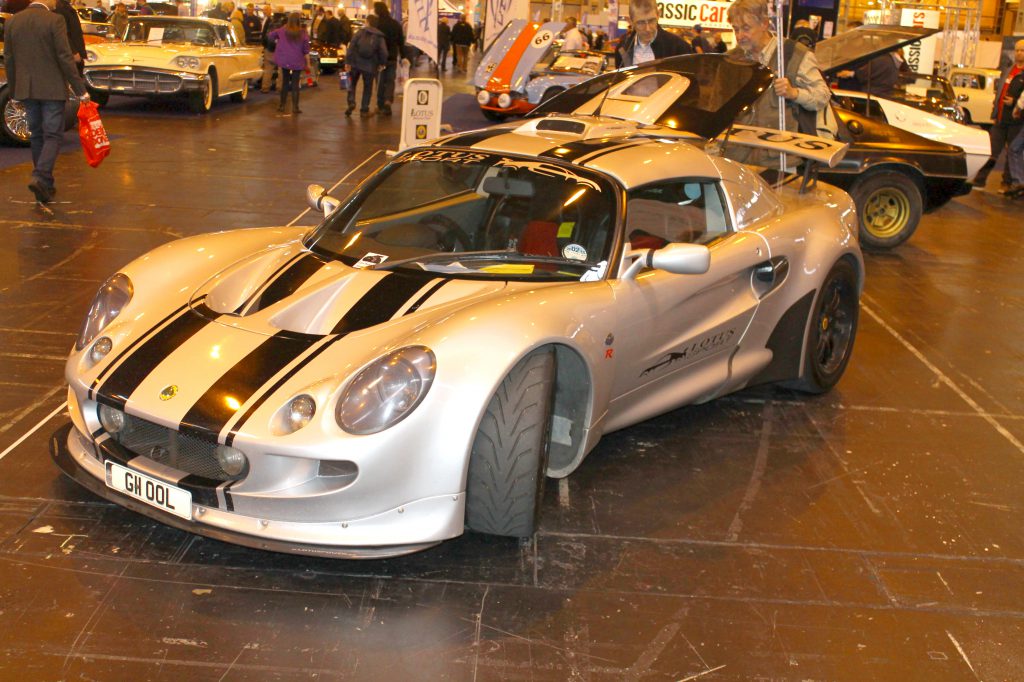





When it was launched at the Frankfurt Motor Show in 1995, the Elise heralded a new dawn for struggling Lotus. It represented everything the brand stood for, returning to Chapman’s formula of a light, affordable rear-wheel drive sports car. Predictably, it was brilliant - and still is - for the Elise S1 has become a wonderful modern classic to buy and own.



When Bugatti took over Lotus in the early nineties, few predicted anything but disaster would ensue. After all, Bugatti was struggling to claw back credibility itself with the ambitious but ill-timed EB110. However, Bugatti’s chairman Romano Artioli did one thing right. He injected Lotus with a fat wad of cash, setting the company free to design its next big hit. The Elise, engineered by Richard Rackham and designed by Julian Thomson, was the result. Lotus even named the car after Artioli’s granddaughter Elise as a way of saying thank you. And what a car to be named after. The Elise was easily the most ambitious Lotus since the Esprit, and certainly the most accomplished. Its engineering was highly advanced - using an aluminium chassis tub to form the base of an epoxy-bonded composite body. This combined with a stark lack of flim flam (there was no brake servo or power steering), made the Elise incredibly light. Power came from the Rover K-Series engine lifted straight out of the MGF, along with its five-speed manual transmission. The engine’s double-overhead cams and 16 valves were perfectly matched to the lightweight body, giving the Elise the same road racer feel of earlier Lotuses. The result was a car straight out of the Chapman school of engineering. The Elise’s small body, coupled with the lack of driver aids, ensured the little Lotus handled like nothing else before it. In fact, to match the Elise’s supernatural steering feel and intensity you’d need to be driving a Caterham 7. But unlike the Caterham, you could drive the Lotus for longer than half an hour without having most of the countryside stuck to your face. Unsurprisingly, the Elise went on to become the most successful Lotus in history, and its derivative is still in production today.
The issue to be most concerned about is the state of the aluminium tub. While these tubs are incredibly stiff and able to resist most impacts intact, if the chassis is damaged they are difficult to put right. If the car needs a tub change the job can take up to 120 hours and rack up an eye-watering labour costs bill, not to mention the cost of the tub, which can be up to £10,000. The good news is that most of the chassis is exposed, so finding evidence of botched accident repairs is relatively straightforward. Firstly, have a look underneath the car for signs of dodgy repairs, aluminium ripples or hastily applied silver paint (covering damage). While you’re under there, cast an eye over the steel rear subframe - a common rust spot and expensive to replace. If the suspension mounts are damaged or held in place by extra rivets then walk away. This is clear evidence of an accident. Another way to find evidence of crash damage is by checking the panel gaps, as well as the state of the glass-fibre body. If there’s scrapes or scratches bear in mind that Elise bodywork is pricey to replace. You can also inspect the chassis from inside the car. Lift up the interior carpets (if it has any) and have a close look at the state of the tub. Another trouble spot is the fabric roof. It’s a flimsy design, with a bit of fabric sitting on two spars and needing to be clipped into place. It’s a very fiddly process to clip the roof on so a previous owner may have broken it.
The engine has long legs if it has been well-maintained (it has been known to top 200,000 miles), but neglect can cause problems. The K-Series engine is infamous for head-gasket failure, and although it is less prevalent when fitted to the Elise, it is still at risk. If the car suffers from inconsistent engine and oil temperatures, has emulsion in the oil/coolant and has a light-coloured exhaust pipe, this points towards head gasket failure. You can also tell if the car has been badly treated if the tappets rattle from cold. The radiator has been known to corrode and its ducts block over time, so it’s worth upgrading to an all-aluminium unit, although this process isn’t cheap. You’ll need to replace the cambelt every four years or 54,000 miles, and change the oil every 9,000 miles.
The transmission is hard-wearing, but does feel disappointingly notchy and takes some getting used to. If the changes are inaccurate then it could mean worn linkages, but if the problem persists the synchromesh may be on the way out and a rebuild is necessary. If the diff whines then you could have a dog on your hands - it is usually evidence of too many full-bore standing starts. The clutch may prove stiff, too, so give it a regular dose of oil spray or replace the bush for a stainless steel pivot.
Because the Elise is so damn capable, it’s difficult to ascertain whether the suspension is worn just from the way it drives. You’ll have to pay close attention to the car over compressions and when it’s loaded up mid-corner. However, as long as you listen out for the usual clunks and knocks, you should discover the source of the issue pretty quickly. The rear set-up is the most likely to fail, with the toe-links ball joints and shock absorbers the most likely candidates. The front upper-wishbone mounting points are another trouble spot. The components are steel, which can react with the aluminium over time, causing bi-metallic corrosion. Check this area out, being sure to check the mount’s fixtures (if these are broken there is no hope of a local repair). If the car doesn’t track right it is a big issue. If the steering rack is worn it is difficult and expensive to replace.
An under-appreciated upside of simplicity is reliability. The Elise’s cabin is spartan, so there is very little to go wrong. The basic switchgear was sourced straight from Peugeot, so it's been heavily homologated and there’s little chance of anything malfunctioning. Check the basics are working (especially the lower spotlights if specified, because they can be pricey to replace).
Continuing with the spartan theme, there isn’t much to watch out for inside an Elise. It is tricky to get in and out of - as you’ll no doubt discover - so the seats and wide sills can quickly become scuffed. Leather is a very desirable rarity on Elise S1’s, and is more hard-wearing. Check if the manual window winders are working ok. These are very tricky and expensive to replace.
The Elise S1 is one of the most visceral driving experiences available anywhere, at any price. The steering is preternaturally direct and knows where you want to position the car before you do. Body roll is non-existent thanks to the ultra-stiff tub and everything is deliciously immediate. Driving an Elise will make pretty much every other sports car feel cumbersome and overweight, especially on narrow British roads. This was a landmark sports car, and it is becoming more relevant as cars become heavier and wider. As mentioned earlier, listen out for knocks from the suspension and the state of the steering, checking for play around the centre and whether the car tracks correctly. The only other danger is that you test drive an Elise and become immediately addicted. Once you’ve experienced one, there’s no going back.
Series 1 Elise values are only going one way - up. Project cars start at around £8,000 for a basic 1.8i, with 11Ss rising to £12,000 and 160’s starting at £25,000. If you’re after a bog standard working example then you’re looking at around £14,000 for a 1.8i, £20,000-£25,000 for the 11S and £35,000 for a 160. When it comes to garage queens, a mint 1.8i will command around £23,000, £28,000 for the 11S and up to £45,000 for a 160.
On one hand, the Elise S1 is a very cheap car to live with, especially by sports car standards. Thanks to its small engine and light weight, it’s pretty economical, and because the powertrain is from Rover, parts aren’t difficult to come by. The reliability is also excellent on the whole, as long as you give it some regular care and attention. However, if something more serious is wrong with the Elise, say a bent chassis or dented body panel, repairs can become hideously expensive, so be wary of marked down project cars - they could mask a void of financial misery.
The Elise is one of Lotus’s greatest hits, and is only becoming more desirable with age. If you’re careful to find a cared-for example, this is a fabulous sports car that will put a smile on your face every time you turn the key.
Clubs & Websites

 Log in / Register