


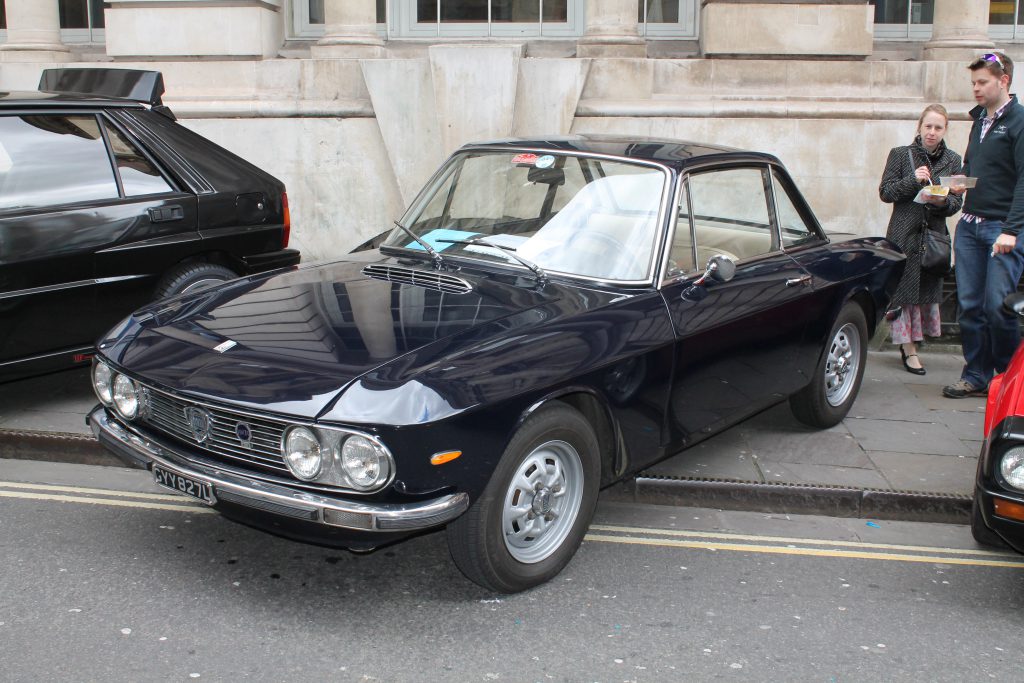


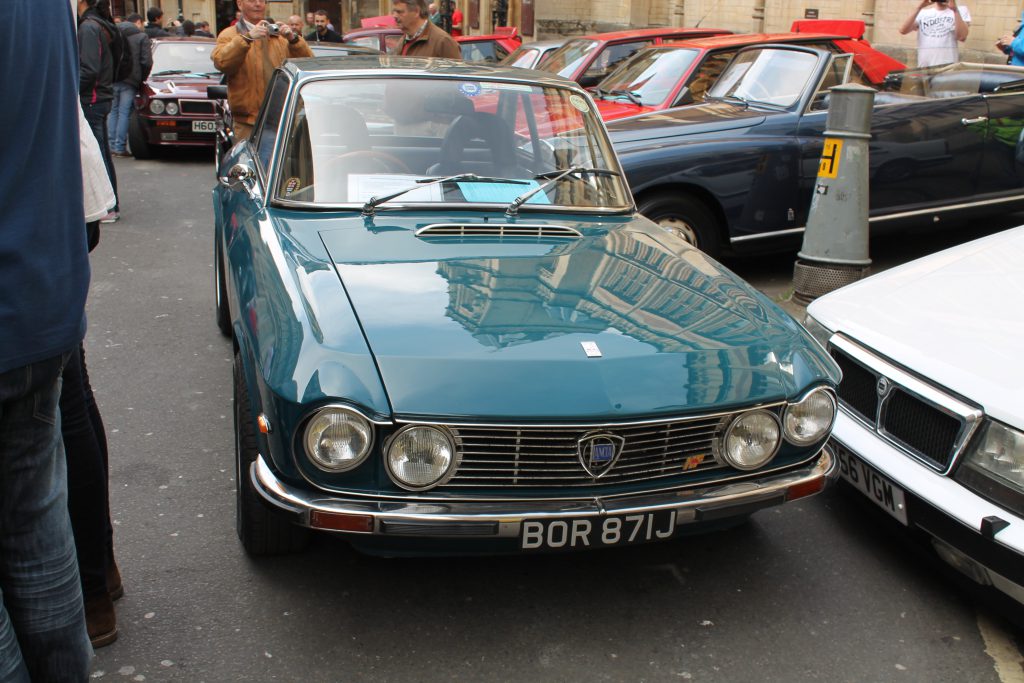

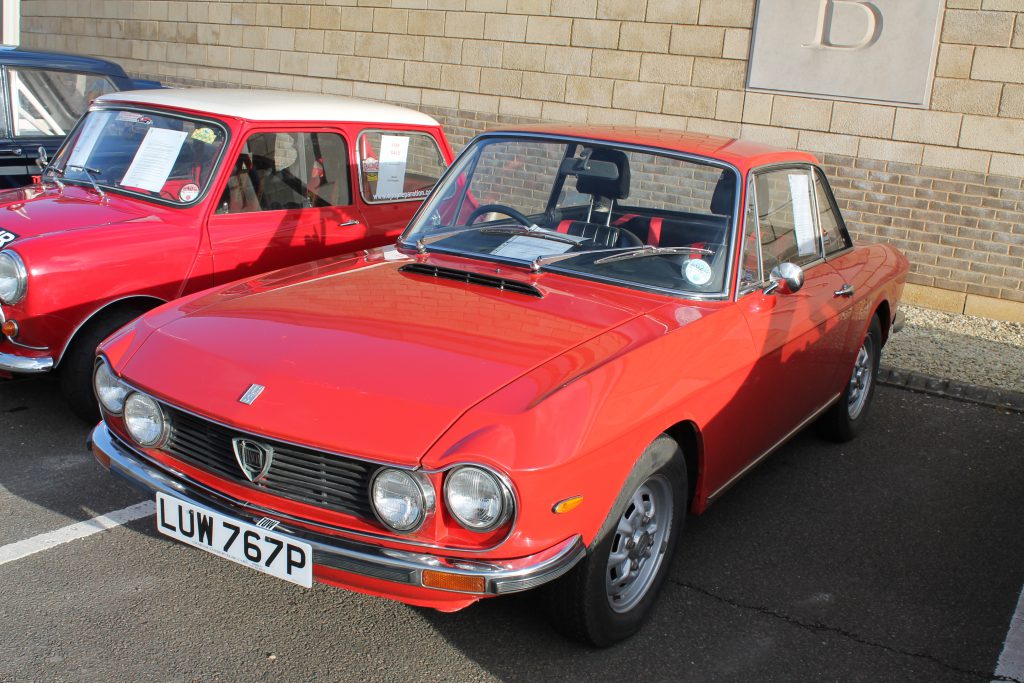
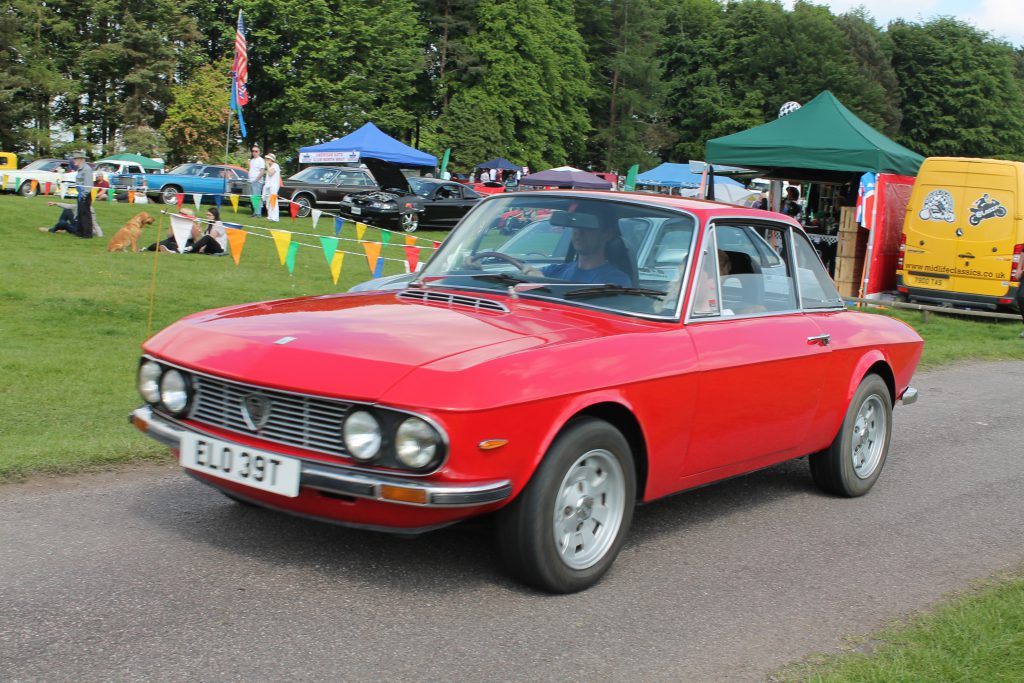

The Lancia Fulvia is, like all Lancias, a fundamentally flawed machine. At launch, it was overpriced, underpowered and had the build quality of a garden shed. The build quality hasn't improved with time, but Fulvia values make far more sense these days. Indeed, while there are many reasons why a Fulvia is not a sensible purchase, using rationale misses the point entirely. What the Fulvia lacks in practicality it more than makes up for with sheer beauty, engineering brilliance and exceptional handling. Classic motoring doesn’t get better (or worse) than this.


While everyone pictures a pretty coupe when they think of the Lancia Fulvia, there was a saloon too (and a Zagato-designed Sport if you’re after something particularly special). It was introduced in 1963 as a replacement for the Appia, and did away with everything that went before. While the Appia was a boxy, aged and utilitarian, the Fulvia was dainty, squat and pretty. It even ditched the Appia’s rear wheel drive setup, in favour of front wheel drive. This shift to front drive rather defined the Fulvia ethos. The little Lancia might have been competing with E Type Jags on price point, but it was a far less boisterous machine in nature. For instance, Lancia fitted it with a 1584cc four-cylinder unit, which produced 80 bhp. It had to be revved hard (peak power arrived at 6000rpm) but this only made it all the more tempting to boot it at any opportunity. Unsurprisingly, the Fulvia is still renowned for its precise handling and agility, due to the lack of mass. Of course the Fulvia’s crowning glory was the 1.6HF, a rally homologation that drives as well as it looks, debuting the 1584cc spec four cylinder. It was the ultimate demonstration of what Lancia achieved with the Fulvia. Stunningly beautiful, hair-raising to drive and pushing engineering boundaries in every department, it remains a high water mark of Italian sports cars. Other changes included a new head and crankshaft, a new block, and a new five-speed gearbox. After thirteen years and two ‘series’ of Fulvias, Lancia stopped production in 1976.
Sadly, when it comes to rust, all the worst Lancia myths are true. The Fulvia’s bodywork ages as well as milk. Rust has the potential to be a huge problem, but you can still head it off as long as you know what you’re looking for. Start by checking the front subframe (taking particular care with the rear mounts), as well as the rear subframe mounts and legs. Also inspect the sills, the wheel arches, the foot wells, the front and rear valances, the doors, boot lid and rear panel, along with the bonnet, window surrounds and panel seams. Basically, every bit of metal on the car.
The rev-hungry V4 engine should be strong as long as it has been looked after properly. However, the water pumps are a notable weak spot. You’ll want to check the level of the coolant and ascertain whether the engine has overheated in the past. The carburettors have also been known to wear, but you can always have them rebuilt or change them for Webers. Bear in mind that Lancia fitted Solex gear that was unique to the car, so finding replacement parts can be tricky. Also keep an eye on the oil pressure and any whiffs of smoke from the exhaust. If the head gasket is dodgy then it may be best to walk away.
It’s the same story with the Fulvia's transmission. The manual gearbox, whether the four-speed unit on Series 1 cars or the later five-speed variant, should be fault-free, but look out for basic signs of age. These include worn synchros, especially on second gear.
The Lancia Fulvia is largely defined by its superb handling, so it won’t take Sherlock Holmes to decipher whether the suspension is iffy. The rear leaf springs often sag, and the front dampers, bearings and ball-joints won’t last forever. Thankfully, none of this is particularly difficult to replace.
Incredibly for an Italian sports car, the Fulvia’s electrics are largely trouble-free. This is probably because there really isn’t much to go wrong. This is no Mercedes S-Class. Bear in mind that if the heater packs up on later Series 2 cars then you’ll have to take out the dashboard to get to it, so make sure it is working.
The majority of Fulvias were trimmed with vinyl, which shouldn’t show its age too badly. Some cars are leather-upholstered, so if this is something you’re after then beware of sagging seats, wear around the bolsters and general tiredness. Cloth trim was also an option and ages just as badly as leather. You needn’t worry, though, because it doesn’t break the bank to retrim a Fulvia cabin. Keep an eye out for sun-cracked dashboards, too. You’ll also want to make sure the dials are all working, because replacement items can be difficult to source.
This is where the Fulvia really comes into its own. It remains a landmark driving experience, and a welcome departure from the heavy, numb sports cars of recent times. While the performance won’t pin you back in your seat, it's enough to enjoy on any road, at any time. The handling is pin-sharp and accurate, while the front-wheel drive allows you to push hard even when the weather is nasty. It is easy to see why the Fulvia was such a hugely successful rally car.
Unlike most classics, the Fulvia is actually more affordable now than it was when it was new. While Lancia was amazingly ambitious with the original asking price (being more expensive than a V12 Jaguar E-Type), values have decreased with time. You can pick up a project for around £3,000 to £5,000, with £10,000 the starting point for anything road-worthy, with mint Coupes demanding anything from £15,000 to £17,000. Naturally, the rarer and more striking Zagato is more valuable, with good examples going for around £25,000. Of course, the top of the range HF is an altogether different prospect, with examples fetching anything between £50,000 to £75,000.
You shouldn’t struggle to find replacement parts for the most part, although some unique trim items will be more difficult. While the typical image of Lancia ownership - on the hard shoulder in a cloud of steam - is justified, as long as you source a well-maintained example and continue to show it care and attention, you shouldn’t have to worry about the horror stories.
The Fulvia is as famous for its motorsport antics as it is as a road car. Lancia chose the Fulvia Coupe as its chosen steed when it decided to return to motorsport ten years after withdrawing from Formula One, in 1965. It was immediately competitive. For years it competed and won at the pinnacle of rallying, being slung around stages by drivers like Sandro Munari, Vic Elford, Pauli Toivonen, Pat Moss, and Rauno Aaltonen, among many others. The Fulvia’s crowning glory came in 1972, when Lancia clinched the World Rally crown for manufacturers, cementing the Fulvia's place in Italian motorsport's hall of fame.
There isn't much more that can be said about the Lancia Fulvia. It's a marmite classic. Some will love its glamour, and others will hate the threat of rust and complications relative to something small, British and MG-shaped. Overall, if you need a Lancia Fulvia in your life, you'll already have an inkling. It's that deep yearning all petrol heads feel in the pit of their stomach when something truly extraordinary blasts past on the motorway. It's a fabulous car and, if you find a good one, a classic that will put a smile on your face for years to come.
Clubs & Websites

 Log in / Register