

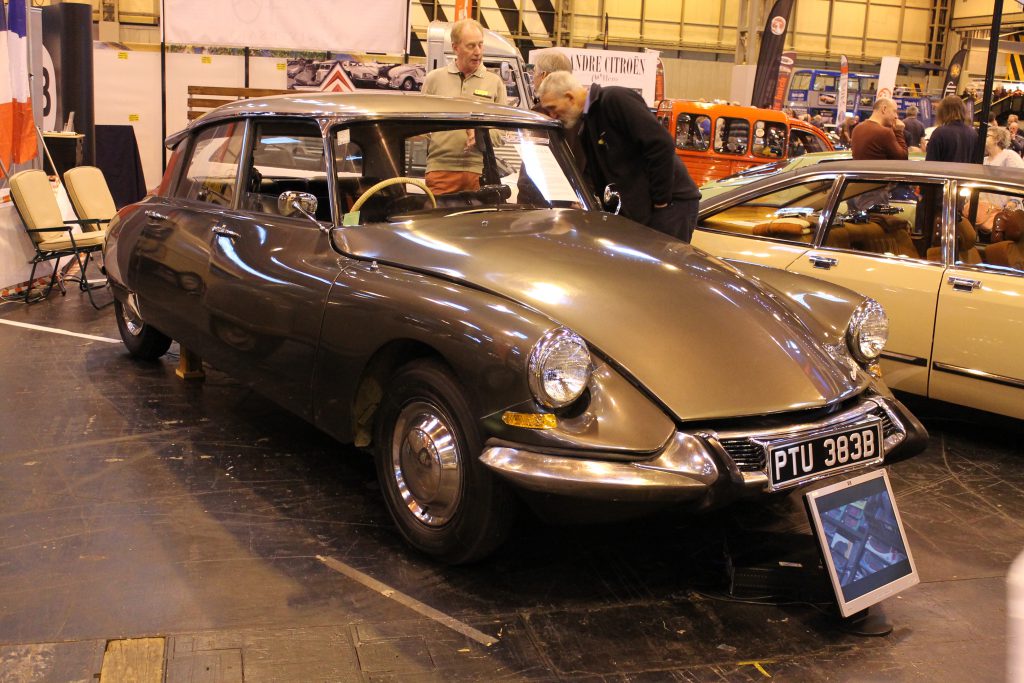
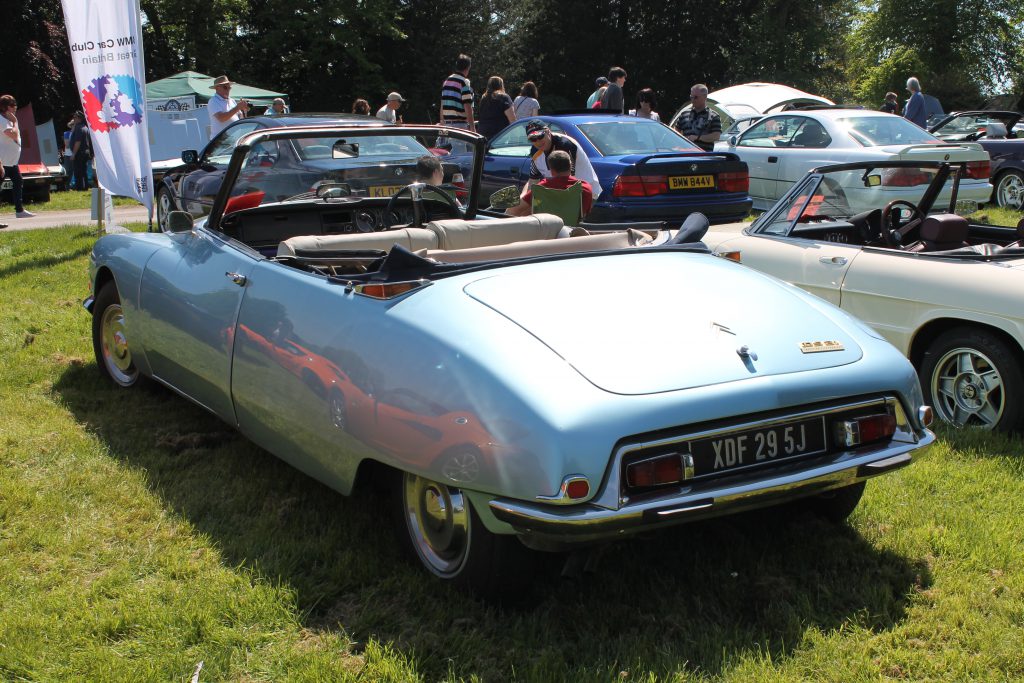
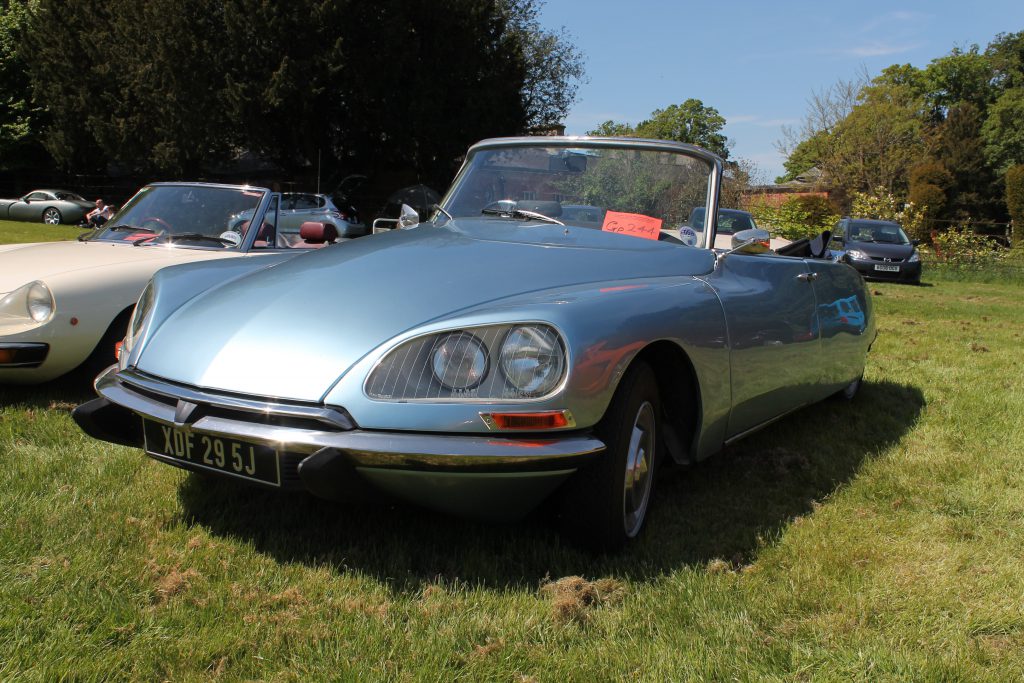
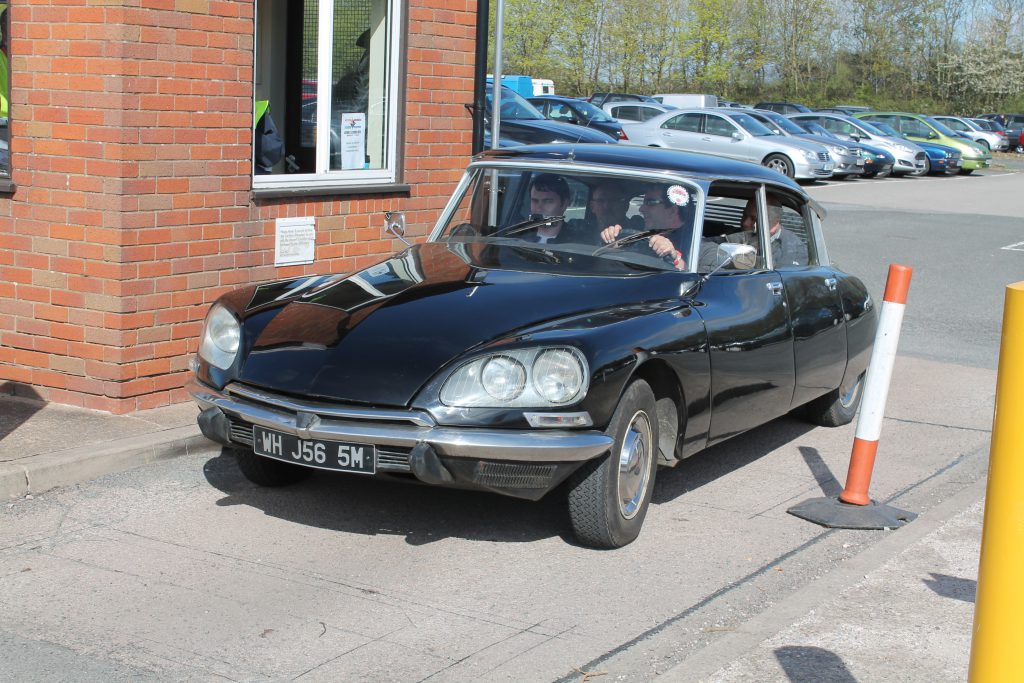


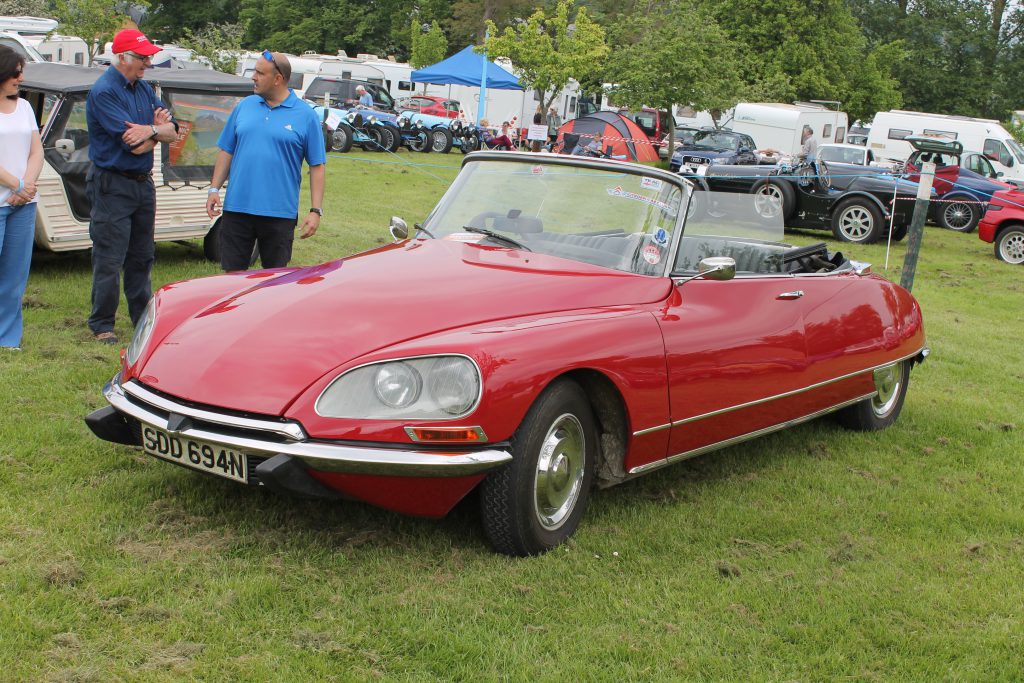
The Citroen DS needs no introduction. Perhaps the pinnacle of Citroen's golden era of brilliantly bizarre innovation and futurism, the DS is one of the most forward-looking and over-engineered road cars ever built. Almost Seventy years since it was designed, the big Citroen is still ahead of its time. The combination of elegant lines, head-scratching complexity and a natural flair only true genius can produce means it still feels contemporary after all this time. If you can afford one, buy one.


The DS was launched at the Paris Motor Show in 1955 to a world that was emerging from the darkness of the Second World War. Cars, like most things produced in post-war Europe, were modest, inexpensive and used dated technology. The emphasis was, understandably, on survival, which made the unveiling of the Citroen DS all the more astonishing. This was a car with hydropneumatic self-levelling suspension, a slippery aerodynamic design and a wealth of design firsts that would stop Elon Musk dead in his tracks. The body was penned by Italian designer and sculptor Flaminio Bertoni and French aeronautical engineer Andre Lefebvre, while the suspension was the brainchild of Paul Magnes. The word revolutionary is laboriously overused these days, but the DS held a mirror up to a conservative, hesitant industry and showed it what was possible. There has probably never been a more glorious statement of French engineering and original thought than the big Citroen. Arriving so soon after the horrors of occupied Europe, the DS's futurism was all the more startling. It signified hope. The results speak for themselves. Twelve thousand people placed orders for a DS on the day it launched. Over the subsequent ten days it was on show in Paris, 80,000 people put down deposits. It is a sales record that has stood for more than sixty years, and the car that finally eclipsed it? The Tesla Model 3. Citroen would go on to sell over a million units during a twenty year production run, with the last DS rolling off the line in 1975. During its lifetime, the DS featured a number of innovations, including a trick semi-automatic gearbox, self-swivelling headlights and power steering. There were other design touches too, such as the steering wheel's central spoke, which was deliberately off-centre to mimic the Citroen chevron, raised rear indicators, disc brakes and a fibreglass roof. Even today it puts other car makers to shame. The fact Citroen itself has used the DS name for run-of-the-mill shopping trollies with some glitter thrown over it demonstrates the rut modern car manufacturers have found themselves in. Perhaps the time has come for another, proper DS.
Check the bodywork for the usual signs of rust and decay. Inspect the sill box sections for signs of bubbling, as well as the boot floor, the rear shelf (where it touches the inner wing) and the rear wing gutters. The leading edges of the rear wings are also a common corrosion spot. You can unscrew the rear wings to check behind them (only held on by a single bolt) to take a look at the bumper mounts, the rear part of the wings and the suspension cylinder brackets. While you’re back there, inspect the boot lid and the door bottoms. You’ll also need to cast an eye over the rear corners of the front wings (especially near the bottom), and just below the lamps on cars with faired-in headlights. The bonnet has also been known to crack in the middle. Thanks to the roof being glass-fibre (or aluminium) there is no risk of rust up top.
The DS was fitted with the antiquated four-cylinder from the Traction Avant, and available in various specifications. There were plans for a six-cylinder unit but this never came to fruition, notably due to France’s strict engine laws at the time. The engine was the most mundane part of the DS, but with convention comes reliability. This is a strong unit which will deliver 150,000 between rebuilds if it’s treated well, with some owners reportedly managing double that figure. It will be the cylinder head that’ll limit you. This is because the alloy cylinder head can crack between the valve seat and the spark plug (due to a lack of anti-freeze), while the engine can seize if the oil filter hasn’t been fitted properly. To fit it properly, you’ll need to align the triangle symbol on the filter casing with the matching symbol on the sump, or the oil flow will be cut off. You’ll likely need to remove the engine to fit a new timing chain (necessary if its overly noisy), in order to fit a new chain and tensioner. It’s a pain, but you can use this opportunity to replace the usually inaccessible engine mountings, clutch and camshaft oil seals, as well as the handbrake pads. Also beware that you’ll need to remove the intake trunking to reach the tappets on fuel injection cars (introduced as an option in 1970).
The DS was equipped with a range of different transmissions. The conventional manual gearboxes are pretty bulletproof and should last the car’s lifetime. It’s the innovative semi-automatic transmissions that are complex - and therefore the most likely to go wrong. The semi-automatic is hydraulically actuated, which means you’ll need to watch out for its many parts. These include the hydraulic gear ‘brain’ and the gear selection cylinders, the clutch operating system and re-engagement control, as well as the centrifugal regulator. As long as you maintain it correctly (or, in reality, find a DS expert to look over it) then you should be fine.
The suspension puts a lot of potential buyers off the idea of a DS. This is a shame because as long as it is well-looked after and you regularly service it, the DS’s complexity is not something to be afraid of. To check if the suspension is in good order, have a look for corroded pipework. You can easily spot if this is case because the fluid is held at 2400psi, so any change in pressure is a red flag. Jack the car up to its highest suspension setting and have a good poke around the nearside rear wheel arch for signs of leaks. The return side can also leak, but this is the low pressure side of the hydraulic system and fixes are simple and won’t break the bank. The spheres that provide the springing and damping are worth a once over. They may need to be recharged. A tell tale sign is if they don’t hold pressure. Their inner diaphragms have likely failed. These are easy to replace. A DS top tip is to understand the types of fluid Citroen used in the hydraulics. The original 1955-1966 cars use a red fluid named LHS or LHS2 (which stands for Liquide Hydraulique Synthetique). This variant holds moisture and can corrode the pipes from the inside out if it isn’t changed regularly and the filter cleaned. The DS also used a green mineral fluid called LHM between 1965 and 1966, but bear in mind that switching to LHM means replacing every unit and a massive quantity of seals because the two fluids don’t mix. If you can hear a clicking sound from the engine bay then the accumulator (which maintains suspension fluid pressure) needs replacing. You’ll need to do this promptly because once the accumulator starts to fail it will leave the hydraulic pump to do all the work, wearing that out too. Talking of running gear, the brakes are another innovative feature on the DS, and another area to keep an eye on. The disc brakes are tricky to get at, meaning they likely haven’t been checked in a while. It is a pain trying to replace the discs, so bear this in mind if your example has worn brakes.
The DS, despite its innovation, was born in an era of very limited electronics. Therefore there aren't an enormous amount of gadgets to go wrong. Check the lights, indicators (which do not automatically cancel) and all the usual amenities.
Most DS models were specced with cloth interiors, although some received leather, and many owners have since chosen to re-upholster their cabins with leather. The back seats (especially parts exposed to the rear window) can crack and wear with sun damage, and the seats in general are - while hard-wearing - likely to show signs of age. Replacement trim and switches are also difficult to come by.
The Citroen DS is unlike any other car to drive. This is the kind of hyperbole you hear a lot from people who drive interesting and exciting cars, but it has never been more true than with the DS. In fact, it will take a while to learn how to drive it at all. The brake pedal is a button, the steering wheel only has one spoke, the indicators don’t cancel and the gearbox is mounted on the dash - with the semi-automatic alien to use at first. It is like going back to school. Once you’ve mastered it though, you soon realise why Citroen designed the DS like it did. It is a glorious car to drive. Refined, relaxing and with a ride-quality that betters everything up to and including a Rolls Royce, there is nothing like a Citroen DS. Designed to be driven across bombed out postwar France, there has never been a machine better suited to the potholed hell of modern roads.
The DS, for all its era-defining design and market shattering engineering, isn’t all that expensive to buy. There were an awful lot of them built, and while most have long since perished, there are enough around to keep values reasonable. There are a number of specifications to choose from. You have the pre and post facelift cars (with different headlights and numerous minor changes), the luxurious Pallas and the huge Safari estate. The convertibles and Chapron versions are exquisite but rare, and exclusively in the realm of collectors. Nevertheless, you can pick up a project saloon for £2,000 to £4,000, a good working runner between £12,000 and £22,000, and an immaculate show car for anything between £20,000 and £30,000. For the Decapotable, a project will set you back at least £25,000 to £30,000, a working example between £75,000 and £90,000, while the concours cars demand a whopping £120,000 to £150,000.
If you buy a well-maintained car that has been driven regularly, you should find the DS to be pleasantly cheap and fun to run around in. The key is servicing the suspension and driving the car often. You’ll find garage queens to be the most troublesome examples because the DS is a car that needs to stretch its (hydraulic) legs. Keep on top of the maintenance and you’ll be fine. Choose poorly, and the bills can be painful.
Remarkably, the DS was a successful rally car. It won the 1959 and 1966 Monte Carlo Rally, and emerged victorious at the brutal 1000 Lakes Rally in 1962. Its strength was its unparalleled ride quality, which allowed it to float across rough surfaces like a magic carpet. It continued to compete in gruelling endurance rally events throughout its production run, proving the DS's strength and highlighting the ingeniousness of Paul Magnes' suspension technology.
Many potential buyers are frightened off by the DS’s formidable complexity and infamous Gallic reliability. As long as you buy well and know exactly what to look out for, this is great news. The fear factor surrounding the DS has kept prices attainable for the person who can appreciate the DS for what it really is - one of the very greatest cars ever made, and one of the most usable, too.
Clubs & Websites

 Log in / Register